Tag Archives: sewing

Floor Cushion

I’ve been needing a floor cushion for a while, but didn’t really want to spend out on a premade one. So spotting a 22″ polyester cushion pad at Shaws Direct for just £1.25, I bought a metre of purple polycotton to go with it, and set about making my own!

Dragons Flame Designs - Floor Cushion

It’s a simple design – plain on the top, with an envelope style closure at the back (like a pillowcase). That means there’s no lumpy zips or buttons when you sit on the cushion.

Dragons Flame Designs - Floor Cushion

I did have to piece the back, as I was originally aiming on using an 18″ cushion, but they only had 16″ or 22″ in stock. However, as it’s on the underneath of the cover, you wouldn’t know it was pieced from the top.

All the seams were stitched as French Seams (including the piecing) to hopefully ensure it’ll stand up to a lot of use, and also that no stray raw edges have any chance of fraying in the wash.

So, for £4.24 (I already had some matching thread left over from making my sun hat), I have a practical floor cushion that is the perfect colour to match the purple and silver theme of the room. Much better (and more comfortable to sit on) than some of the ones I’d spotted as premade cushions!

Shock horror – it actually fits!

I had fully expected this floppy sun hat to also be a flop, but much to my utter amazement, it actually came out better than that!

purple-hat1

It’s a pattern previously recommended by Love Sewing magazine, but the link they have to it no longer works 🙁

Luckily for me, my head measurements are identical to the person who wrote the pattern, so there’s no maths involved. I bought a metre of purple polycotton and some heavy iron-on interfacing (the previous hat pattern used sew-in interfacing which I found was too easy to rip as I turned the brim out). So far so good; the hat only cost me about £5 in supplies, but now comes the hard part – the sewing!

The lining is sewn more like an interlining for this hat – the seams are visible on the inside. That was great practise for faux overlocking, as the standard zigzag foot results in a tunnelling effect when I use it on the fabric edges.

Attaching the brim was an interesting process, as I had to add in a few pleats to make it fit…. but that was actually part of the pattern, so I didn’t feel I had made a mistake there.

purple-hat-inner

I chose to add a bias binding trim over the faux overlocked seam edges where the main hat piece meets the brim – it’s not something you should be able to see, but it should stop the seams irritating my forehead!

purple-hat-front

Overall, I think I’m actually quite pleased with this hat – I could do with adding another layer of interfacing on the brim if I make another, as the brim is a little too floppy for my liking. However, it fits (yay!!), so I’m happy with this one 🙂

purple-hat-head

Father’s Day Hat…. that also didn’t fit!

I was struggling for something to get my Dad for Father’s Day last month – I’d asked him if there was anything he was particularly wanting, and was told “surprise me”…. not all that helpful!

I knew he’d been unable to find a decent summer hat in the shops, and I’d spotted a pattern on Melly Sews, which I thought would work perfectly. To start with, I made a pattern for a hat that would fit a teddy bear, and that came out pretty well:

black-hat1

(it does fit the bear it was intended for, but this bear is more photogenic…. it just has a larger head!)

I made a pattern from newspaper, bought the outer and lining fabric, and started pinning it together. After sewing the crown to the main front of the hat, I asked Dad to try it on…. and of course it was too small. However, it did fit me! So as I couldn’t make the hat any larger without starting from scratch, I decided to stick with the hat and make it for myself instead. I was almost ready to attach the brim when another relative asked to see it, and suggested that the main part of the hat was too tall. Cutting that down by a couple of inches, I pinned the brim to the hat and it still fitted me.

Buoyed on by my apparent success, I then machine stitched the brim to the hat, and guess what? Yeah, you guessed it – the hat’s now too small (ironically, it’s not tall enough over my ears now). I tried hard to stick to a really narrow seam allowance and it was pretty even all the way around. All I can think is that the original measuring is out a bit and maybe also the cutting.

I will try another hat for Dad before the end of the summer, but I think I will try a polycotton version first, rather than just diving in with the decent fabric next time!

Simplicity Sewing Challenge 2016

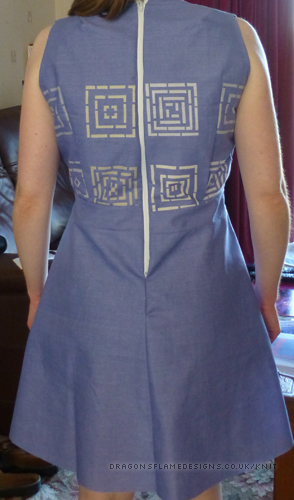
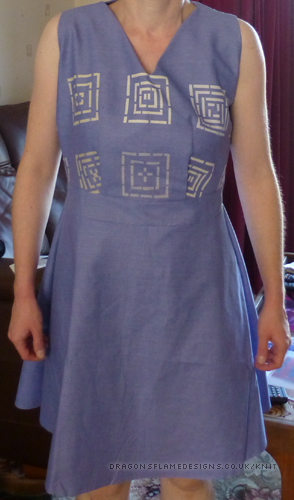
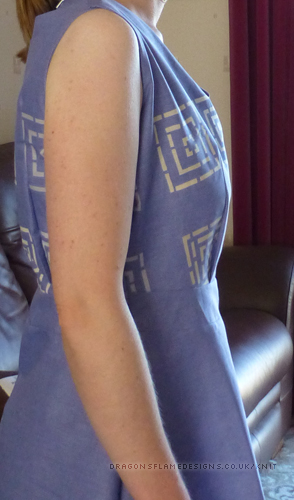
Back in May, I signed up for the Simplicity Sewing Challenge – I chose two categories to enter: Best Dressmaker, and Best Blogger Feature. Part of the challenge is to put your own style into the pattern, so I’ve been trying to figure out just how I’m going to do that.

It took a while for the patterns to arrive, but they came in the post at the beginning of the month, so I’ve started on a muslin version of the dress. Cutting out the pieces was interesting, given that I’ve never made a dress with princess seams before, and my ability to sew an accurate opposing curve tends to be lacking! But I’m definitely up for the challenge for that.

Dragons Flame Designs - Simplicity Sewing Challenge

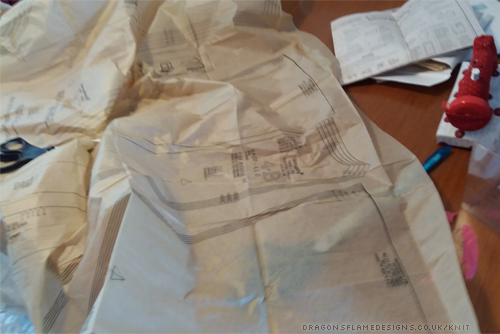
Tracing off the dress panels using dressmaking carbon paper

The blogger category allowed you to pick a pattern from the other categories, so I chose the skirt. Originally I was planning on making the button-up version, but I decided that the zipped one might be a style I would get more wear from. I do have an idea of how I can make that slightly different to the pattern, but it’ll be interesting to see if I can actually achieve what I have in mind!

So far so good – I’ve got the pieces cut out for the dress, and have started working on the skirt for a bit of variety. All I need to do now, is get a zip in the right length, so I can work on that part.


Pattern Fitting Trouble

I don’t know about you, but trying to make an item of clothing that actually fits is something I’ve been struggling with. Either the pattern company is adding some strange amounts of ease, or the pattern has hardly any ease at all!

So, I decided to have a go at making a bodice sloper to try and figure out my own sizing a bit better. So far I have the paper pattern drawn out – it looks a bit small, but the instructions said to stick with it, so that’s what I’m going to do! I doubt the armholes will look right, given that I don’t (yet) have a French Curve ruler to use, but I’m hoping that the fit will be reasonably accurate to my shape.


Several weeks later, and I have a bodice sloper that kind of fits! The back seems a different length to the front for some odd reason, and there’s quite a generous amount of ease – I’m not sure if that was intentional from the pattern instructions or if my measuring was off in a few places!

For this sloper to actually be of some practical use, I now need to figure out how to make alterations to a pattern using my sloper as a template. The website guide I was using, showed how to spot where some alterations could be made, but didn’t actually explain how to actually alter the patterns, so I’ll have to hunt around for some instructions on that!


The BIG Vintage Sew-along

I’ve neverBV sewalong - badge_thumb sewn a vintage-style garment before, but when I saw the BIG Vintage Sew-along advertised online, I decided it was worth trying.

I picked a vintage inspired shirt: Butterick 6217, which seems to fit me more accurately than the other tops I’ve tried making so far!

I made a version from a duvet cover to start with, but that was way too big across the chest, and also a bit too low – verging on “indecent” to wear outside!

So this is the sneak peek at my second attempt, made from some fabric I bought in a remnants pack. I took off an inch at the shoulders on the front, adding it back onto the base again, and that seems to have resolved the too-low V-neck problem. I just need to get the buttons attached, then I can get some photos of it actually being worn.

tie-front-sneak-peek

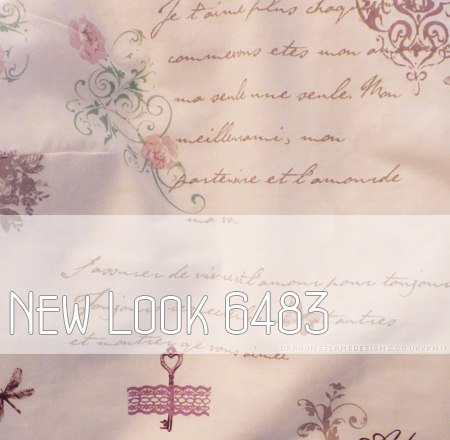
New Look 6483

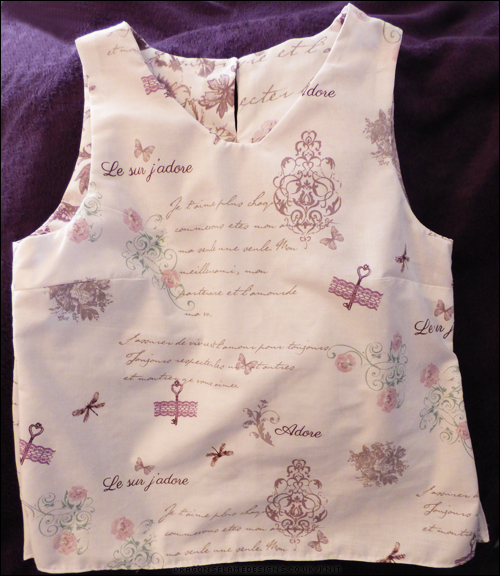
The June 2016 edition of Sew Magazine came with a free New Look 6483 pattern – with 5 different styles of tops, all able to be made from non-stretchy fabric, I decided this was one I would definitely get a lot of use from.

It’s designed as quite a loose fit, so looking at the finished garment measurements, I chose a size 8…. usually I’d make an 8 for the shoulders and chest, and grade it out to a 12 at the waist, but this one is plenty big enough!

shell-top-1

This was view C, but I have cut the neckline a little deeper – the original line for the neck was much too high for my liking, but I didn’t like the wide nature of view E. I probably would try making that as a proper v-neck next time.

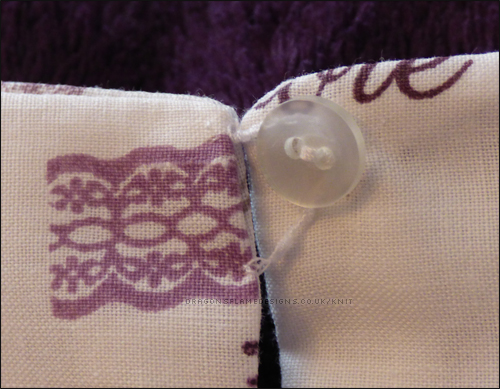
The only real trouble I had in making the top, was making the thread loop…. the instructions weren’t overly informative on how to achieve it, so I had to ask for advice on that. In the end, I made a kind of blanket stitch around the three thread loops, and that seems to work.

button-loop

The fabric is actually a duvet cover from Primark – it’s not the thickest of fabric, but it’s fully washable and will be nice and light for the summer.

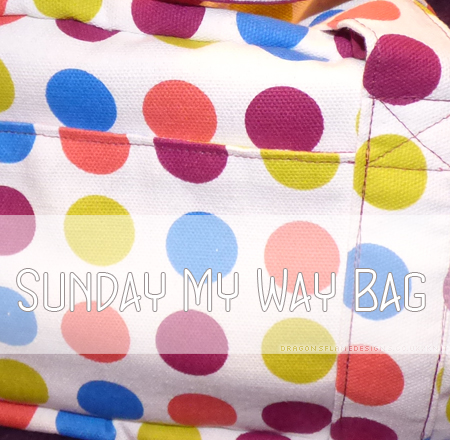
Sunday My Way bag

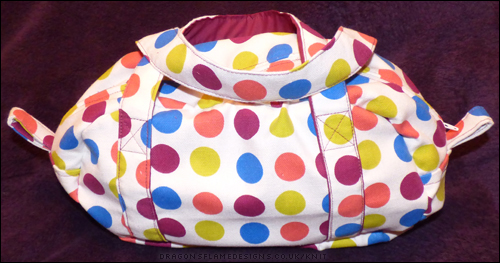
The last couple of messenger bags I’ve made haven’t quite gone to plan – either the lining hasn’t co-operated as I’d hoped, or the pockets aren’t quite the right size. Either way, I decided it was time to try making a different bag completely. So, I thought I’d use some of the polka dot canvas I had in a remnant pack from Abakhan, and some burgundy polycotton I had left over from the previous messenger bag, to make the Sunday My Way bag.

bag-back

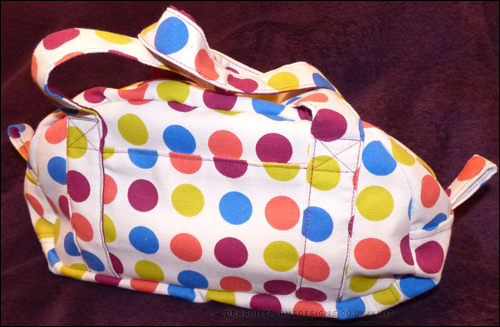
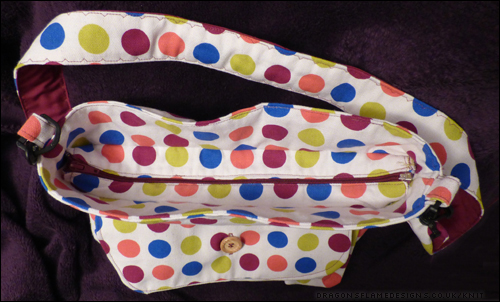
It’s a completely different style to the others I’ve tried making, with a slip pocket on the front, a long zip with tabs on either end, and straps that look like they go all the way around the bag, but don’t actually cross the bottom piece.

bag-front

If I made another one of these, I would probably change a couple of the methods – topstitching the strap over the existing topstitching was almost impossible to get it accurate. For my own bag, that’s not something I’m too concerned about, but if I was making one for someone else then I’d want it to look neater than that!

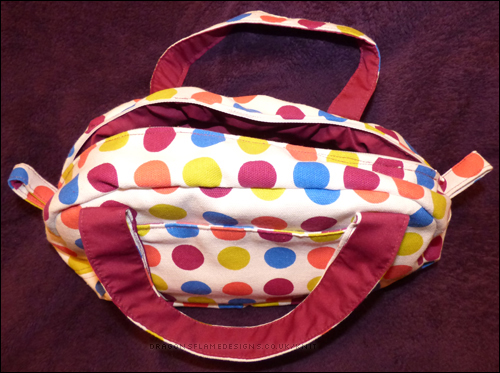
bag-top

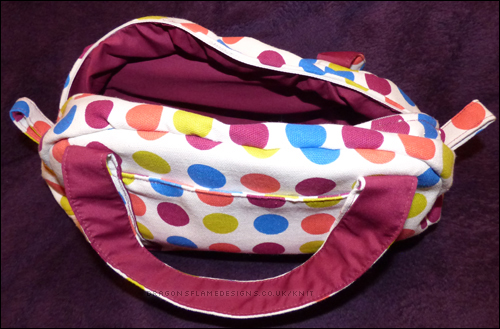
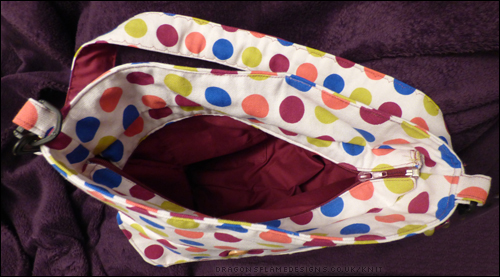
The lining is inserted in a different way to any other bag I’ve made before, attaching it to the seams of the main bag body. That went reasonably well (other than the lining already being puckered where I couldn’t get the seams to lie totally flat), but sewing the lining to the zip seam was a real challenge. Again, you have to top stitch over the existing stitch lines…. as I did that, the lining shifted slightly so some of my stitching didn’t catch the lining at all. In the end, I hand stitched the lining to the zip, which gave it a neater look.

bag-open

I didn’t add any interior pockets to this one – I decided it’d be a useful shopping bag to hold any purchases, rather than needing pockets for a phone and a wallet!

My first attempt at “Design Your Own Handbag”

Having had enough of the problems with the other messenger bags I’ve tried making, I decided to “invest” in a Craftsy Course called Design Your Own Handbag. Promising to tell me how to make several different pockets styles and zipped closures, I felt it was worth the money as it should prove useful for many different bags.

I will admit I didn’t find this course as easy to follow as the Fleece Sewing one I’ve started – yes there’s a lot of information, but as the bag design is up to each individual, there’s a lot of things that I feel could be explained a bit better.

Lining the outer pocket up was a bit hit and miss – mainly miss, as I had to unpick the entire thing and resew it. The inclusion of an interlining (I used some thick cotton I found in a local fabric shop) meant that it was a bit too thick to get my hand sewing needle through to tack everything, so I had to make do with pins…. which wasn’t ideal.

However, the second time around, I did get the pocket to line up – and the button I’d already machine stitched onto the pocket, also lined up with the buttonhole!
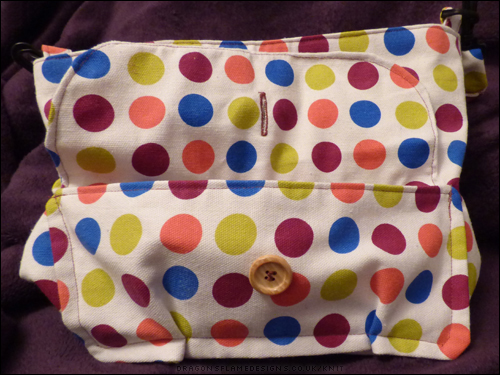
handbag-4

Just to prove the button does do up….
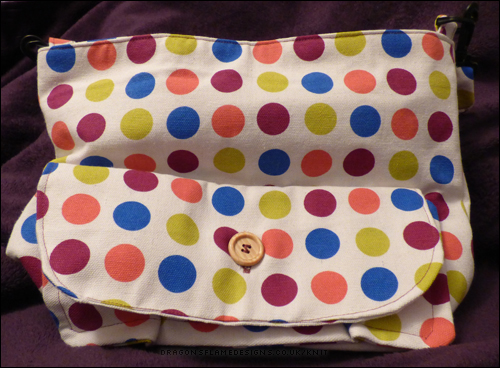
handbag-3

Adding the back zipped pocket was also a challenge – after stitching and unpicking it, I decided to make it more like a welt pocket, so you couldn’t see the zip tape. That gave a nicer finish, although if I made another, I would also add an extra inch to the width of the pocket pieces – that would enable me to sew it neatly around, without the risk of catching the zip tape on the sides.

The rest of the bag outer was pretty self explanatory – much like the Good to Go messenger bag, you cut the corners from the main pieces in order to get the depth of the bag. My canvas was a bit too fray-happy at times, resulting in some extra stitches being necessary, so I did zigzag the edges of some pieces just to be on the safe side.

Due to the fraying, I had to ignore where it’s said to trim the edges really close to the stitching, but while that made some of the seams a little more bulky, it didn’t really change the look of the finished bag.

I added a couple of patch pockets to the inside, like I did on the previous bags, but other than that, the lining pieces were just the basic pattern ones.
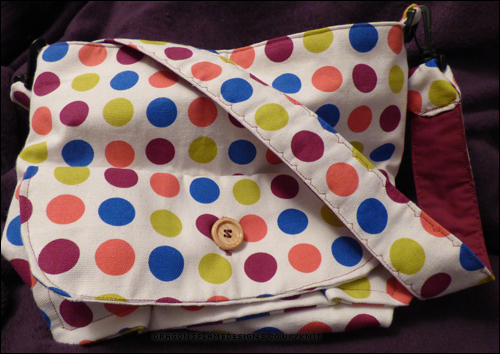
handbag-1

I decided to add some tabs on the sides to hold a strap, rather than adding a tab to the front and back – I prefer a cross-body strap. Top stitching the strap was done with a decorative stitch, just to make it look a little different to the regular boring straight stitch. The tabs and strap were made almost identically to my London Tourist bag.

Now we come to the main reason for me wanting to take this Craftsy course – the top zip. None of the other bags I’ve made have had a closure to the main body, so this was an important thing for me to want to learn. After all, even if you have a flapped messenger bag, a strong wind can make the flap flip up, so it’s nice to have a secure way of closing it.
handbag-5

I struggled to get the top piece to line up to the zip – it’s the first time I’ve used an open (separating) zip, so I didn’t realise the metal at the end took up so much space. Partly because of the fraying canvas, and partly due to not cutting a little extra on the flaps, I didn’t have space to turn the flap pieces right-side-out and keep the metal part of the zip on the outside. So that side had to be zigzagged together – not an ideal finish.

However, using some double-sided fusible tape to ‘baste’ the zip in place seemed to work really well for that – much better than the back zip pocket (too many layers for the heat fro the iron to go through). And the zip is perfectly usable and relatively neatly stitched as well!

Rather than leaving a hole in the base of the lining to turn it all right-side-out (I really like my lining to be strong, and I didn’t feel that a hand sewn seam would have the strength I was after, I left a gap at the top, where the facing and outer join – that was able to be closed with the final top stitching, so you wouldn’t know there’d been a gap there 🙂
handbag-2

The only other thing I wish the course had pointed out, was that the angle of the top zip means that it needs to be pushed down into the bag to run smoothly – this means you can’t put anything in the bag that would be 1″ or less from the zipper flaps…. which means my entire bag really could’ve done with being an extra inch tall to compensate *sigh*

I would try making another bag from this course, mainly because now I know the ‘quirks’ of the methods, I should be able to rework it and make a bag with the [erfect (or near enough) dimensions!


Polka dot fabric from Abakhan (part of a ‘canvas remnant pack’), polycotton lining, cotton interlining and and accessories from a couple of local shops.

Beach Hut Messenger Bag

You can never have too many bags…. or at least you can never make too many bags! I’ve not been 100% certain about the way the lining looks caught up on the messenger bags I’ve previously made, so I decided to try out a new pattern. The Good-to-go messenger bag by Two Pretty Poppets, has a plain body with a patterned flap…. but I wanted to change that slightly, so I used their pattern, but with patterned fabric on the outside, and a plain lining.

I also added in a zipped pocket on the flap, piping around the flap (it’s not clear in the photo, but that’s white bias binding with sailboats on, to fit the beach theme), and added some plastic bag clips to hold the strap in place – not only does that make the strap removable if needed, but it also adds a nice touch to the finished bag.

Beach Hut Bag

Because of the way the bag is sewn together, the lining isn’t stretched around strange corners, and there’s no weird puckers and stretches on the inside. I also changed the inside pockets, to fit a small bottle of water and a smart phone, to save rummaging around amongst everything else just to find the phone when it rings.

Beach Hut Bag

I would probably make the bag slightly taller if I made another, and maybe also add in the clasp to close it (I left that out, as I wasn’t too sure how accurately I could attach it!), but I think it’s a very good pattern, and it’s also a lot easier to sew than the previous one I tried!