Tag Archives: sewing

Happy Halloween!

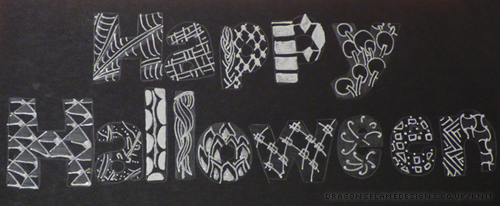
How do you make a really good looking Halloween card, that isn’t just full of witches, cats and spiders? I was completely stuck until I came across a book on Zentangles – that gave me an idea…. what if I was to write out the letters, then do a Zentangle style pattern in the middle of each one?

Some black card a white gel pen and a white pencil later, this is the end result:

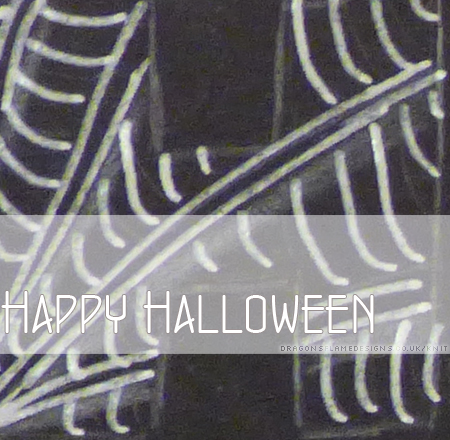
Happy Halloween

The outside of the card, with a Zentangle-inspired look

The white gel pen wasn’t as opaque as I’d hoped, and some of the patterns needed going over a few times to make them stand out, but it still has a really striking effect on the black!

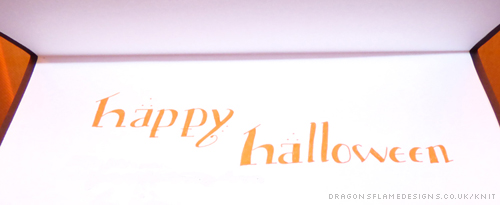
Happy Halloween - Hobbit

Inside the card – copying a Hobbit font

But for the inside, I wanted to use an orange gel pen…. so I cut some white paper to line the card, and copied a Hobbit-themed font from my computer screen to make it look a little more unique!

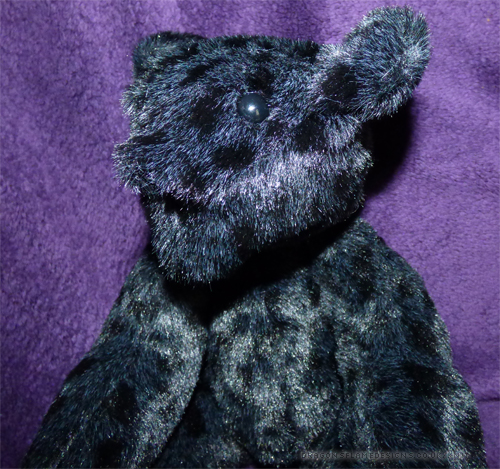
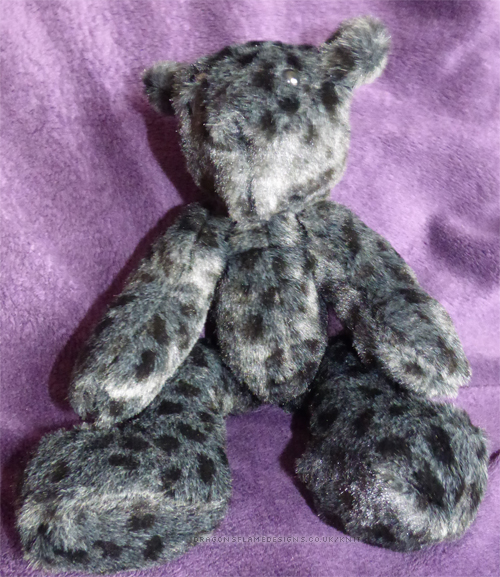
I knew I wanted to send a gift with the card, and I’d found the bat pattern from BeeZee Art a little while ago. I made the mistake of buying some nice thick fleece to make the bat…. and ended up having to hand crank the sewing machine, as even with a denim needle, it struggled with the thickness of the fabric layers!

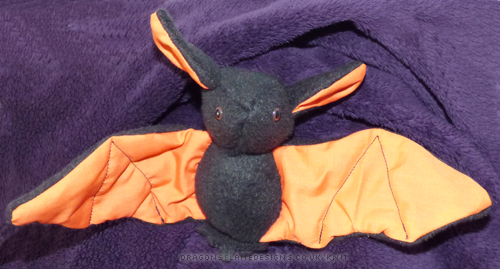
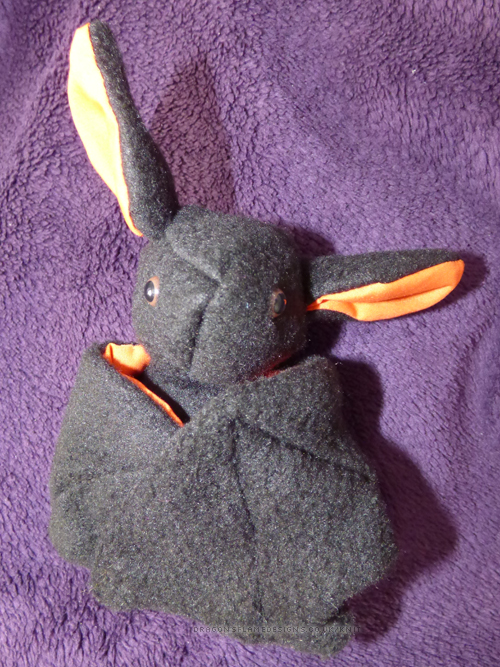
I’m pleased with how the bat came out though – although the black fleece was a nightmare to work with, it gives Batty a nice plush feel, and the orange lining for his ears and wings (remnants from the polycotton lining of the Trendy bag‘s second version) lifts the black.

Bat - wings open  Bat - folded wings

My topstitching on the wings came out surprisingly well, even though his nose is slightly crooked! But his new owner loved him, and that’s the whole point 😀

A Lush little bag….

When I go shopping for some bath products, I don’t want to just have them in my main bag – they’d make everything smell! I love the look of the new Butter Bear Canvas Bag from Lush but at £9.95, I decided that I was better off making a bag of my own – then I can almost guarantee nobody will have one quite like mine!

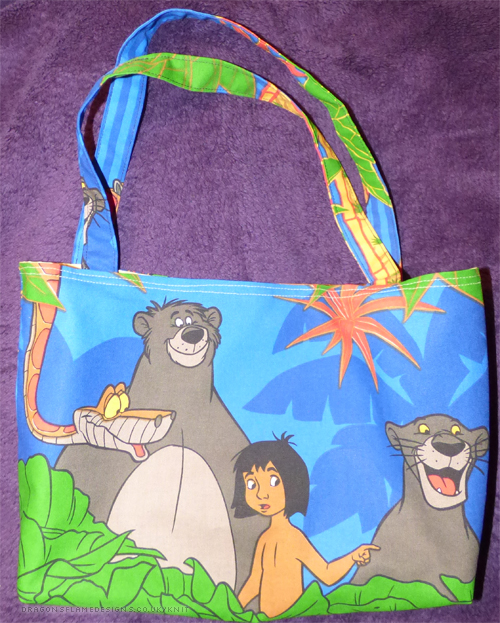
So, using some of the Jungle Book fabric I used for the messenger bag, and also some of the same cotton for the lining, I made up a Fat Quarter Bag using Amy’s pattern. I did change the dimensions a little, to work around the fabric pattern, and I also added in a French seam on the base (otherwise the back would be upside-down!

bag-front

Once I added in the gusset in the base, the bag ended up a perfect size to carry a pot of Dream Cream, one bubble bar and two Butterbears!

bag-back

And the best thing about it? It didn’t cost much for the fabric, as it uses just over a fat eighth of each, and it’s completely washable just in case anything spills in it!

Handy clothes peg bag – tutorial

Having seen the condition of my Mum’s clothes peg bag, I decided it was time she had a new one. Being the kind soul that I am, I thought I would share this clothes peg bag tutorial with you for free. 🙂

Materials

One  wooden clothes hanger (this is a children’s hanger, approx 33cm (13″) from side to side) if your clothes hanger is wider than this, simply increase the width of the fabric to suit (make sure add in a 5/8″ / 1.5cm seam allowance on both sides when working out the width).
Outer fabric – two pieces 36cm wide x 41cm high
Lining fabric – two pieces 36cm wide x 41cm high
Matching thread


Seam allowances are 5/8″ (1.5cm) unless otherwise stated. Tacking is done 1/2″ (1.2cm) from the edge.

Preparing the Fabric

Supplies

  1. Take the piece of fabric you want to use for the back of the clothes peg bag, and tack (baste) it to one of the lining pieces, wrong sides together. This will stop it moving around as you sew the pieces later.
  2. Take the piece of fabric you want to use for the front, and tack that to the other lining piece, right sides together.

Marking and Making the Opening

      1. Draw the opening onto the fabric using chalk / something that won’t show through to the other side (I cheated and used a pencil) I centred my opening, making it 8 cm from the top seam, 15cm from the bottom seam. That gave me an opening 15cm high, and I made it 13cm wide.

        Measurements

        Just in case those instructions make no sense, here’s a diagram showing the measurements I used

      2. Carefully stitch over the marked opening, using a short straight stitch.
        Opening - stitched

        I stitched the opening in black to make it easier to see where I needed to cut the hole

        You’ll probably notice that my opening isn’t totally even both sides – that’s not a problem, as it’s not overly noticeable when it’s finished!

      3. Carefully cut out the opening, staying within the stitching, and clip the curves so it is easier to turn (make sure to not clip the stitches!).
        Clipped Curves
      4. Carefully unpick the tacking stitches around the outside edges.
      5. Turn the front pieces through the opening you’ve just cut, and press flat.Turned and pressed
      6. If like me you chose to use a non-matching thread up to this point, change the thread to a more suitable colour, then top stitch the opening…. I used the side of my presser foot as a guide for a nice narrow seam allowance.Top Stitch

Putting the Bag Together

  1. Take the front piece (with the opening), and the back piece (back main fabric and lining still tacked together), and place them right sides together. Pin around the outside, but mark a small space at the top for the metal hook of the clothes hanger to poke through.
    Important: This bag will have a straight top edge – for a small hanger, it isn’t really necessary to make a slope to the top, but if you’re using a larger hanger, you might want to draw the right slope onto the lining fabric so you know the exact line to follow on the next step.
  2. Starting just on the side of the opening (marked with a * on the image below), stitch down a little, then sew the 5/8″ seams around the bag. When you get to the other side of the opening, turn and stitch off the edge again, so you have two small lines either side of where the hanger will fit through.

    I’ve gone over the seams on the computer so you can see where the stitching is (the thread blends in a little too well on the lining!)

  3. Trim the seam allowance down a little (just to stop it being so bulky).
  4. For extra reinforcement, I stitched around the seams again, 1/2″ from the newly trimmed down edge (yes, this does make the bag a little smaller). This time however, I started below the opening, just backstitching on both sides to reinforce it.
  5. Turn through the opening, and press
  6. Fit the hanger into the bag, carefully slotting the hook through the gap at the top

And there you have a finished clothes peg bag, ready to fill with pegs!finished-front front-detail finished-back

I’d love to see the peg bags you make with this tutorial – simply post links to the pics in the comments 🙂

Main and lining fabric from Fashion Fabrics.


This tutorial is provided free for everyone to use. Link backs to this tutorial are welcome – please do not copy the tutorial and post it on your own site!

You may sell items you have made from this pattern, but please do not sell the pattern itself! 


Another jacket – blazer

I was browsing through some blogs the other week when I came across Melly Sews and their fantastic free blazer pattern. With the words “free” and “jacket”, it wasn’t something I was going to pass up on, so I printed the pattern and started cutting & sticking the paper together.

It’s only a one-size pattern, which unfortunately for me is too tight across the back and the arms. However, undeterred by that, I set about adding an extra inch on the back panel and side seams.

The pattern calls for patch pockets, but there’s something about patch pockets that never look right to me – maybe it’s my poor quality top stitching, but they never seem to fit the look of a smart jacket. So I followed the instructions for welt pockets instead:

Welt Pockets

They aren’t perfect, they’re pretty shallow, but they’re usable and that’s what counts!

I needed to make a lining, and I didn’t want to use the same fabric to line it with, so I bought some plain blue polycotton to balance out the patterned polycotton on the outside,

Blazer

I think this jacket looks quite similar to the CC one I spotted earlier in the year, with the back vent and notched collar. Ok, my top collar is actually round the wrong way – the lining fabric should be on the inside not the outside, but that adds some individuality to the jacket I think,

And the best part of this jacket? The only hems are on the sleeve cuffs – the lining is sewn to the main fabric around the base then turned round the right way, so there’s no massive hem at the base to sew up! 😀

New Look 6231

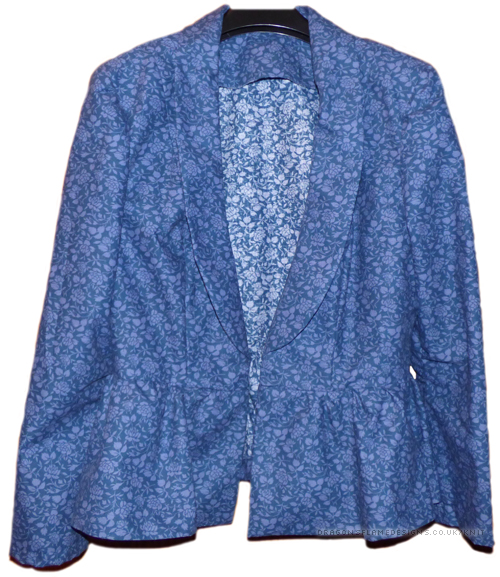
Finally I’ve completed the hem on the jacket! This was the first jacket I attempted, and it’s been sitting on a clothes hanger for ages while I plucked up the confidence to tackle the hem.

The peplum gives the jacket an interesting shape, but unfortunately it also gives it a curved hem…. and that was something I really struggled with.

The inside of the hem isn’t the neatest and there are some tucks and folds in there, but from the outside it looks pretty neat and that’s what matters. After all, who’s going to see the inside of the hem anyway?

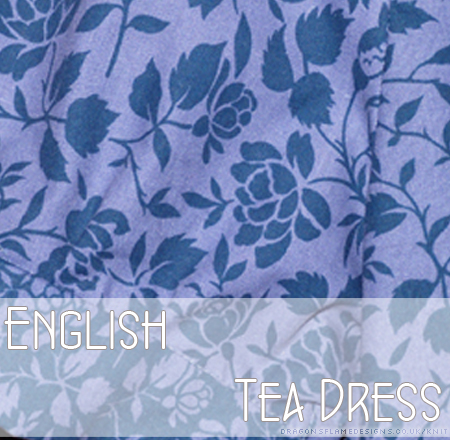
English Tea Dress – take two

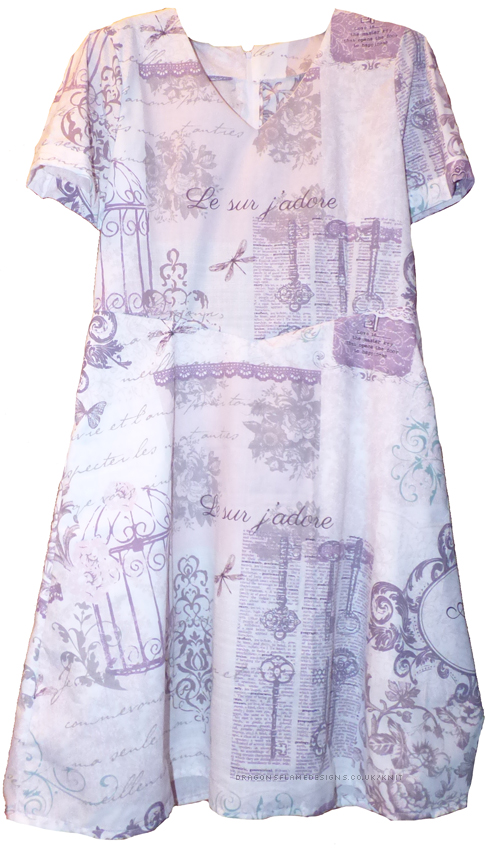
Following on from my success with the English Tea Dress, and realising that the style actually seems to suit me a lot better than the “fit -and-flare” style dresses I’ve tried before, I thought it was time I dug out Summery duvet cover, to make a second dress from.

Tea Dress

Of course this fabric doesn’t really fit the English Tea Dress name, so I’ve renamed this one the French Tea Dress. The duvet cover also came from Primark, and was slightly more see-through than the previous one, so I had to make a lining for the skirt. I cheated though, and just cut another piece of each skirt part, then held them together as I stitched the seams, treating the two pieces of fabric as one. I’m positive that not the “correct” way to include a lining, but it worked for me!

Unfortunately, I didn’t have quite the right length of zip, so it’s a little snug to get on and off…. but it still fits, even though there’s a couple of areas on the sides which aren’t perfectly aligned (blame that on adding in the second piece of fabric for the lining – my seams didn’t catch all found layers on the sides, so there’s a few wiggly lines here and there).

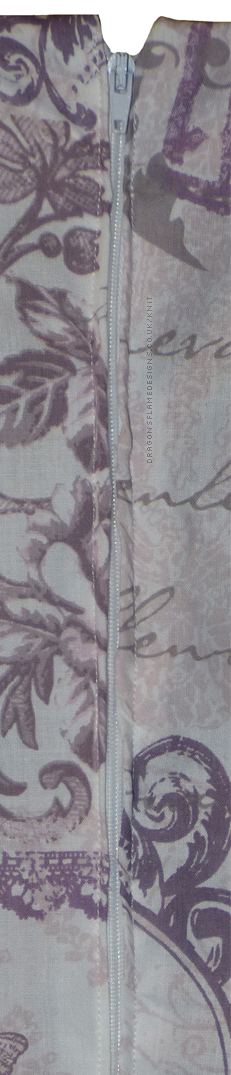
Tea Dress Zip

The zip itself is a load neater than the first one – I think I’m gradually getting the hang of this now! All I need to do next is find some shoes to wear with it – trainers just wouldn’t look right.

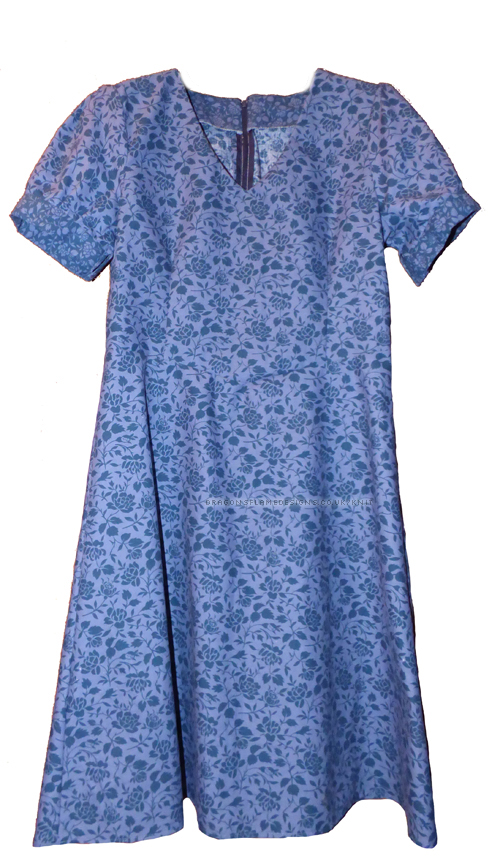
English Tea Dress – take one

My previous experience with Simple Sews patterns wasn’t all that fantastic. Using the measurements provided, the dress should have at least fitted, but the back wouldn’t meet, let alone meet enough for a zip to go in. But the style of the English Tea Dress made me want to have another go, in the hope that I could figure out the fit a little better.

The neckline is more suited to my taste, with a nice v-neck that has just the right amount of plunge. The back is a round-neck, so no worries about picking a suitable bra to wear so the straps don’t show!

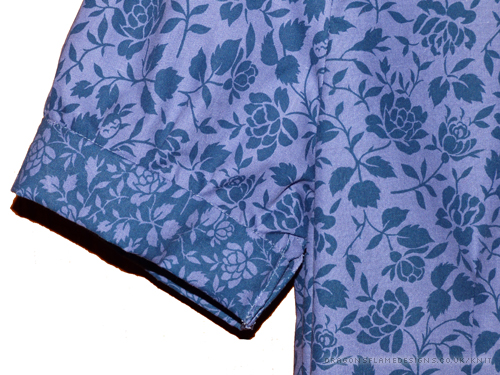
I did give an allowance of an extra inch on each of the back seams but I hardly used any of that, so the sizing definitely seems like it’s more accurate for this one. I will admit I got in a mess with the sleeves though; the pattern didn’t really make complete sense for the cap sleeves, nor for attaching the cuff. So, I used the short gathered sleeve, and added a contrast cuff as if it was bias-binding, rather than following the instructions. The cuff was slightly snug so I left it open on the end, stitching down the seams on either side.

Tea Dress - sleeve detail

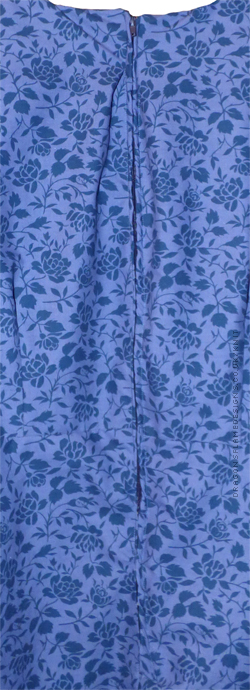
The zip isn’t the neatest in existence, and I used a regular zip rather than an invisible one, but for a first attempt at a zip in a dress, I think it came out really well 🙂

tea-dress-1-zip

The fabric was actually half of a single duvet cover from Primark (£9), so including the thread and zip (I already had the interfacing from a previous project), the dress cost me £6.40. Now that’s a bargain, especially for my first finished dress!

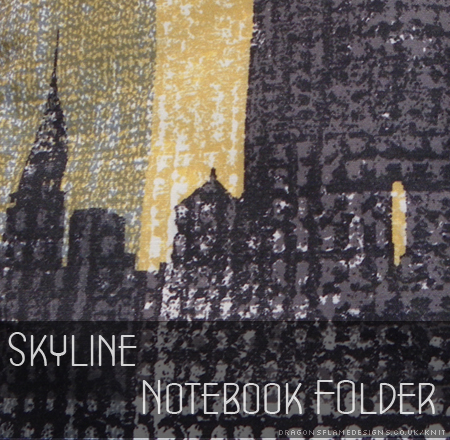
Skyline

I found this incredible fabric in the sale for just a pound per metre. I’m honestly not sure what fabric this actually is; my best guess is a kind of canvas – slightly shiny and textured and reasonably thick. The fantastic pattern of silhouetted buildings would be perfect to make something for an architecture-loving friend, but I wasn’t too sure what I would be making.

Going back through my folder of downloaded patterns, I came across the Notebook Folder Tutorial from Riley Blake Designs. I’d made one of these previously, but struggled to get all the layers through my Mum’s sewing machine, so I wasn’t too sure how this canvas would behave!
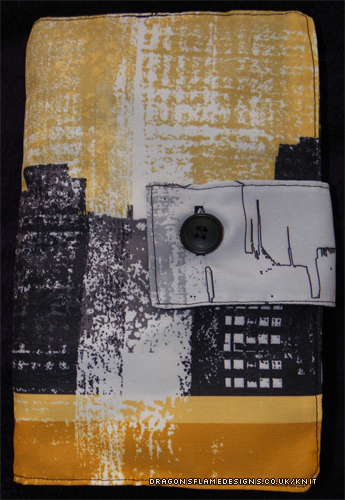
Notebook Folder

Outer cover, complete with strap and button

The inside of each panel is a black polycotton which compliments the silhouettes and also helps balance the thickness of the fabric.
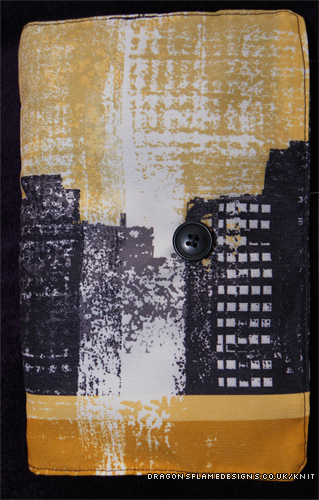
Notebook Folder

Front cover with strap undone

I don’t trust my hand-sewing enough to stitch the button on by hand, so I machine stitched it on after completing the folder. There was just enough space to sew it in while holding the slanted pocket out of the way.
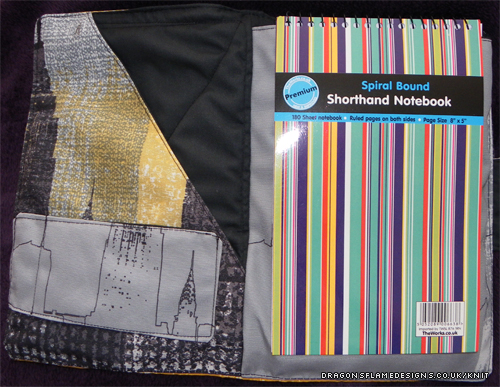
Notebook Folder

Inside the folder. There’s a pen pocket on the left, and the pouch to the right is large enough to hold an extra large notebook!

I decided to skip the interfacing as the canvas is sturdy enough without it. I couldn’t find any batting in my local shop, so I picked wadding instead and quilted  it to the inside panel so it wouldn’t shift around as I turned the folder the right way around. I also cut the wadding shorter than recommended, leaving a half inch border around, to ensure the final seams wouldn’t overlap it.

The quilting could be a bit neater; if I made another, I might try and make more of a feature of the quilting, picking a better pattern than a simple cross on the back.
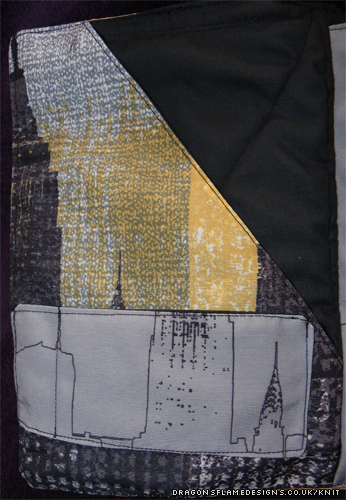
Notebook Folder

The inside cover – you can just about see the quilted backing behind the slanted pocket.

I used a denim needle in my sewing machine due to the thickness of the canvas. It stitched really easily, which was a pleasant surprise after the struggles I’d had with the previous one on an older machine!
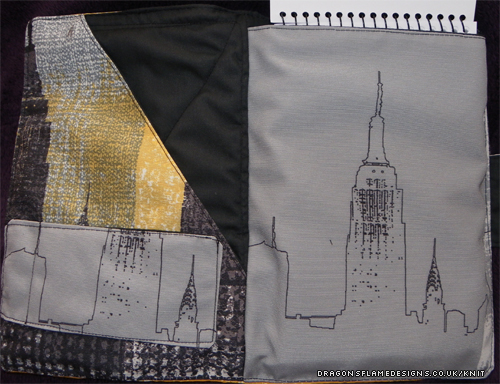
Notebook Folder

Inside the folder, with the notebook lifted out of the way.

There’s a couple of seams that aren’t entirely straight, mainly because I had the canvas layer on the bottom, and it seemed to slip as the feed dogs fed it through the machine. But overall it came out really well.
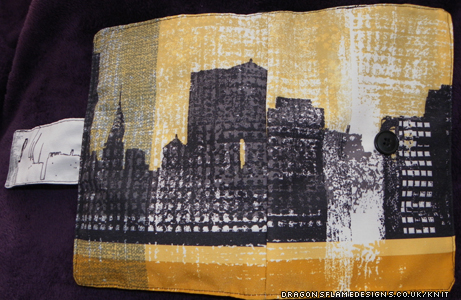
Notebook Folder

Finished notebook folder – front and back covers, with the strap

Sewing – UFOs

I’ve been working on several sewing projects lately, most of which have yet to be completed for varying reasons! So, here’s a (not so) quick run down of my current UFOs (UnFinished Objects), in the hope it’ll spur me on to get at least one of them completed!

  • First attempt dress: I haven’t worked on this lately, as I’m trying to learn how to do shaping for the bodice, so I can try to get the fit to work. At the moment, the darts don’t line up quite right, the neckline is far too high for me, and the zip doesn’t meet at the back….
    Edit: this one has been shelved indefinitely…. or until I know a lot more about alterations!
  • The jacket:  This is waiting for me to have the patience to try hemming the base. I’m not 100% sure the style suits me, as it has a peplum which does enhance the shape of my rear…. and that doesn’t really need any enhancement. However, I do want to get this finished, so either I need to try hemming on the curved base, or maybe try using some bias binding to cheat a little.
  • Top number 1: My mistake on this one, was to follow the sizing on the Simplicity pattern – instead of working from the finished garment measurements, I worked on the suggested size. As a result, this is way too big right now. The instructions on the sleeve were really hard to follow; after I stitched it on, I realised I’d messed up, so I need to unpick that and redo it. Like the first attempt dress, I need to learn how to alter the top so I can make it a better fit and something I could wear, rather than something that will just sit on a hanger.

top-1

  • Top number 2: This one worked a lot better – it’s meant to be a loosely fitting top, and fits quite well. I shelved this while I was getting a couple of buttons for the back loops and haven’t quite had the right amount of patience yet to try sewing them on.
  • Dress number 2: Almost finished, but just needing a couple of adjustments, this was actually made from rough guidelines courtesy of Culture of Thrift. I’m not 100% happy with the style of the skirt part and the left strap needs a bit of work to make it fit properly, but overall considering this wasn’t made from a printed pattern, I’m quite happy with how it fits. Also, it’s proving a good exercise in how to make darts that fit me!
Dress - 2

Following the guidelines at Culture of Thrift

  • Dress number 3: I wasn’t overly inspired by the look of the dress on the magazine cover, and the pattern is designed by the same company as my first attempt, which means there’s the potential there for the fit to be a little out. But after seeing some of the pictures people had posted of the dress as they’d made it, I decided it was worth a try. Using the other half of the duvet cover from the jacket, I’ve got as far the zip…. which is pinned in at the moment, just to figure out the sizing.I need to rework the cuff on the sleeves, as at the moment it seems too tight. I might just make a vent where the seam is and hope that gives enough allowance for my arms to be able to move! The dress itself actually fits me (I did add an inch on the back seams just in case, but I don’t think I’ll actually be needing that!), and I just need to buy and sew in a suitably dark coloured zip, then hem the base of the skirt.

dress-3

It’s not the most summery of fabrics, as the duvet cover it’s made from was quite heavy. However, that means it shouldn’t be as see-through as the lighter ones, which should save the hassle of figuring out how to line it!

Edit: This dress now becomes my first completed dress 😀


They’re not looking too terrible at the moment – all I need to do now, is get on and finish some all of them!


Smartphone Case Tutorial

A while ago, I knitted a smartphone case for my Mum, but she was looking for a second case, and requested a fabric one. I couldn’t find any tutorials that worked for her specific phone, so I decided to make it up myself, and share this Smartphone Case Tutorial with you!

This case will fit a Nokia Lumia 530 with a little wiggle room, and also a Samsung Galaxy S2 (very snugly). If you have a different sized phone, you could always add a little onto the width of the pieces first – it’s better for it to be slightly too big to start with, as you can always take it in before you finish!


Materials

10″ x 10″ outer fabric (I used a remnant from a fat quarter)
10″ x 10″x lining fabric (I picked a firmer fabric to give it some body)
10″ x 10″ wadding (you could use batting, but I used the lightest-weight wadding my local craft shop sold)
1 x hair elastic
1 x button
Supplies

In the end, I decided not to use the ribbon to make a keyring loop

Cut out the fabric

  1. From the lining fabric, cut: one rectangle 4 ½” wide and 6 ½” high, and one rectangle 4 ½” wide and 8 ½” high.
  2. Cut the same from the outer fabric.
  3. Cut two 4 ½” x 6 ½”  rectangles from the wadding.

Quilting the wadding

If you skip this step, nothing will stop the wadding from moving around when you turn the case the right way round later, so this step is important!

  1. With the small lining rectangle WS up, stitch the wadding to the top edge with a 3/8″ seam.
  2. I stitched straight down the centre, and made a wonky diamond, but let your imagination run wild to quilt the wadding to the lining! You won’t see much of it when the case is finished, but you’ll know it’s there.
    quilting
  3. Stitch around the remaining three edges with  a ¼” seam. This will hold the wadding in place on the edges, but the seams won’t be visible on the finished case.

Set the small rectangle to one side, and do the same with the large rectangle, except that this time we need to line the wadding up at the base of the rectangle, leaving the top section unwadded. This will be the top flap, and if it’s padded it makes the case a little too bulky to put into a coat pocket!

With both lining rectangles finished, it should be looking something like this:

wadding

The unwadded top flap is folded over on the right, with the small lining rectangle on the left

The front smartphone case section

  1. Taking the small lining rectangle, and the matching outer rectangle, place them RS together. Stitch across the top edge with a ¼” seam allowance.
  2. Turn to RS, and top stitch over that seam with a 1/8″ seam allowance.top-stitch-front
  3. This is now the front section.

Putting it all together

This is where it starts to sound really complex, but you’re almost at the finish line!

      1. Take the large lining rectangle, and place it RS up. This will be the back lining for the case.
      2. Place the hair elastic at the top of this rectangle, with the neat loop pointing towards the bulk of the fabric. Pin or tack (or both – hair elastics can be a nightmare to keep in one place before stitching!).

        Hair Elastic

        The metal piece will be inside the seams, and can be cut off before turning.

      3. On top of this, place the front piece, with the front lining face down, so the front cover is RS up.
      4. Finally, place the back cover on the top, WS up.
      5. Pin and tack! This is really important, as it’s so easy for something to move as you stitch!
      6. Mark a gap to be able to turn the case the right way out. I left a gap on the corner which wasn’t ideal, but it was easier than leaving a gap where there’s more than 2 layers!
      7. Sew carefully around the case, with a ½” seam allowance, backstitching at both sides of the gap to reinforce the seam. When stitching over the hair elastic, I ran a few stitches backwards, then came forwards again just to ensure it’s held firmly.
      8. Trim the seam allowances to make it less bulky when turned, and clip the corners being careful to not cut into the stitches. Cut the metal part off the hair elastic.
      9. Carefully turn the case the right way around – this will seem quite fiddly, but stick with it.turned
      10. Before doing anything else, check the phone fits comfortably in the case. If the case seems a little large, turn it back the wrong way around, and sew another seam down either side, just a little further from the edge than the first ones, to make it a little narrower. Then turn back the right way and check again.
      11. Assuming the phone now fits comfortably in the case, carefully fold in the edges of the gap, so they match the seam line on the rest of the flap.
      12. Top stitch around the flap, with a 1/8″ seam allowance to close the gap and make the flap look better. I prefer to make the flap corners a diagonal rather than perfectly pointy corners, but you might prefer to make them perfect right angles.
        top-stitch-flap
      13. Put the phone back into the case, and check the required position of the button. Remove the phone (again) and carefully sew the button onto the front of the case. You could of course have machine-stitched the button on earlier, but this way you can ensure a snug fit for the phone, rather than risking it either being a bit loose or the elastic not quite reaching.

And there you have it! One finished smartphone case!

Phone Case - finished


I’d love to see the cases you make with this tutorial – simply post links to the pics in the comments 🙂


Outer fabric and button from The Makery, lining fabric from Hobbycraft and hair elastic from WilkoNone of these links are affiliate links.


This tutorial is provided free for everyone to use. Link backs to this tutorial are welcome – please do not copy the tutorial and post it on your own site!

You may sell items you have made from this pattern, but please do not sell the pattern itself!