Sunday My Way bag

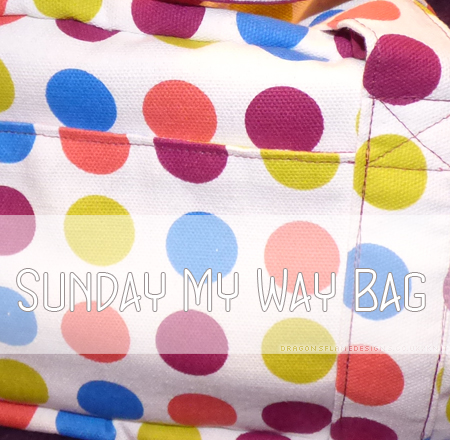
The last couple of messenger bags I’ve made haven’t quite gone to plan – either the lining hasn’t co-operated as I’d hoped, or the pockets aren’t quite the right size. Either way, I decided it was time to try making a different bag completely. So, I thought I’d use some of the polka dot canvas I had in a remnant pack from Abakhan, and some burgundy polycotton I had left over from the previous messenger bag, to make the Sunday My Way bag.

bag-back

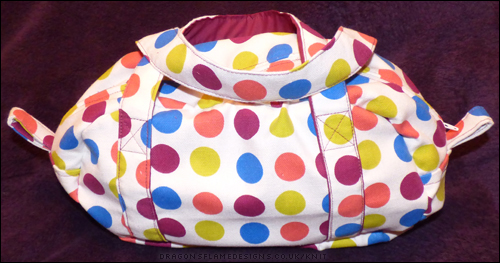
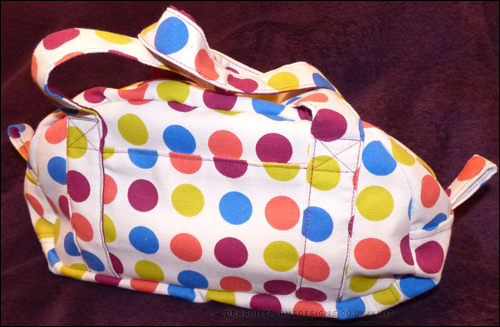
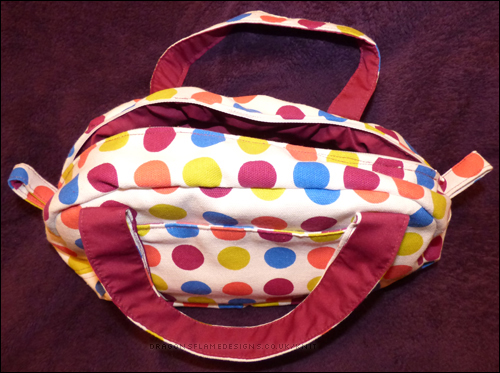
It’s a completely different style to the others I’ve tried making, with a slip pocket on the front, a long zip with tabs on either end, and straps that look like they go all the way around the bag, but don’t actually cross the bottom piece.

bag-front

If I made another one of these, I would probably change a couple of the methods – topstitching the strap over the existing topstitching was almost impossible to get it accurate. For my own bag, that’s not something I’m too concerned about, but if I was making one for someone else then I’d want it to look neater than that!

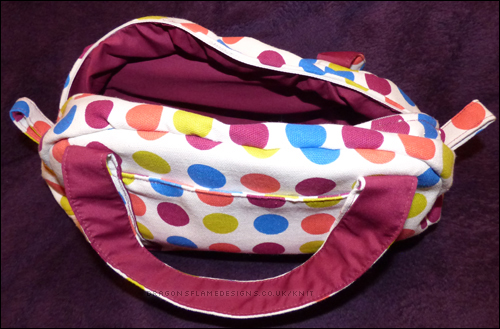
bag-top

The lining is inserted in a different way to any other bag I’ve made before, attaching it to the seams of the main bag body. That went reasonably well (other than the lining already being puckered where I couldn’t get the seams to lie totally flat), but sewing the lining to the zip seam was a real challenge. Again, you have to top stitch over the existing stitch lines…. as I did that, the lining shifted slightly so some of my stitching didn’t catch the lining at all. In the end, I hand stitched the lining to the zip, which gave it a neater look.

bag-open

I didn’t add any interior pockets to this one – I decided it’d be a useful shopping bag to hold any purchases, rather than needing pockets for a phone and a wallet!

My first attempt at “Design Your Own Handbag”

Having had enough of the problems with the other messenger bags I’ve tried making, I decided to “invest” in a Craftsy Course called Design Your Own Handbag. Promising to tell me how to make several different pockets styles and zipped closures, I felt it was worth the money as it should prove useful for many different bags.

I will admit I didn’t find this course as easy to follow as the Fleece Sewing one I’ve started – yes there’s a lot of information, but as the bag design is up to each individual, there’s a lot of things that I feel could be explained a bit better.

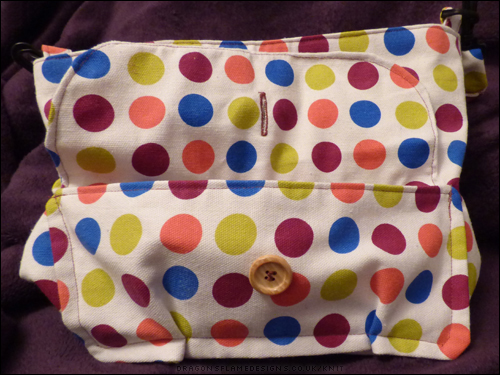
Lining the outer pocket up was a bit hit and miss – mainly miss, as I had to unpick the entire thing and resew it. The inclusion of an interlining (I used some thick cotton I found in a local fabric shop) meant that it was a bit too thick to get my hand sewing needle through to tack everything, so I had to make do with pins…. which wasn’t ideal.

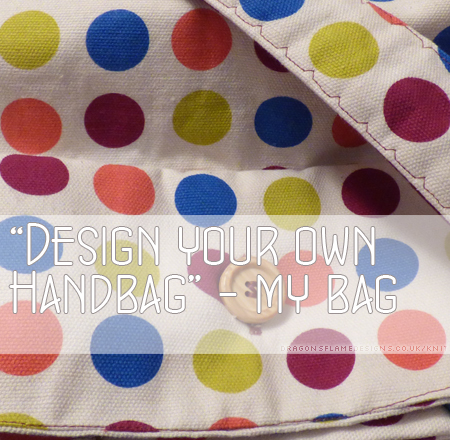
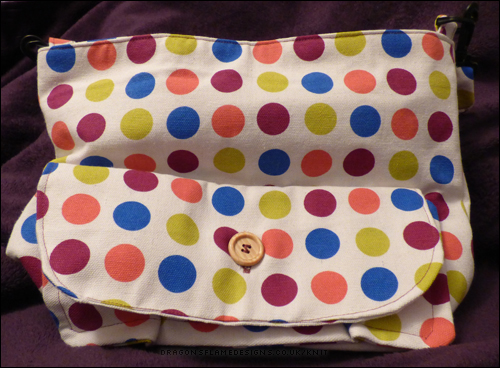
However, the second time around, I did get the pocket to line up – and the button I’d already machine stitched onto the pocket, also lined up with the buttonhole!
handbag-4

Just to prove the button does do up….
handbag-3

Adding the back zipped pocket was also a challenge – after stitching and unpicking it, I decided to make it more like a welt pocket, so you couldn’t see the zip tape. That gave a nicer finish, although if I made another, I would also add an extra inch to the width of the pocket pieces – that would enable me to sew it neatly around, without the risk of catching the zip tape on the sides.

The rest of the bag outer was pretty self explanatory – much like the Good to Go messenger bag, you cut the corners from the main pieces in order to get the depth of the bag. My canvas was a bit too fray-happy at times, resulting in some extra stitches being necessary, so I did zigzag the edges of some pieces just to be on the safe side.

Due to the fraying, I had to ignore where it’s said to trim the edges really close to the stitching, but while that made some of the seams a little more bulky, it didn’t really change the look of the finished bag.

I added a couple of patch pockets to the inside, like I did on the previous bags, but other than that, the lining pieces were just the basic pattern ones.
handbag-1

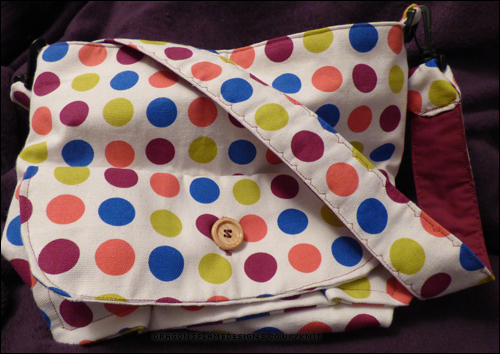
I decided to add some tabs on the sides to hold a strap, rather than adding a tab to the front and back – I prefer a cross-body strap. Top stitching the strap was done with a decorative stitch, just to make it look a little different to the regular boring straight stitch. The tabs and strap were made almost identically to my London Tourist bag.

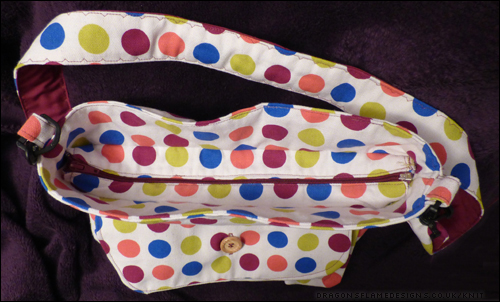
Now we come to the main reason for me wanting to take this Craftsy course – the top zip. None of the other bags I’ve made have had a closure to the main body, so this was an important thing for me to want to learn. After all, even if you have a flapped messenger bag, a strong wind can make the flap flip up, so it’s nice to have a secure way of closing it.
handbag-5

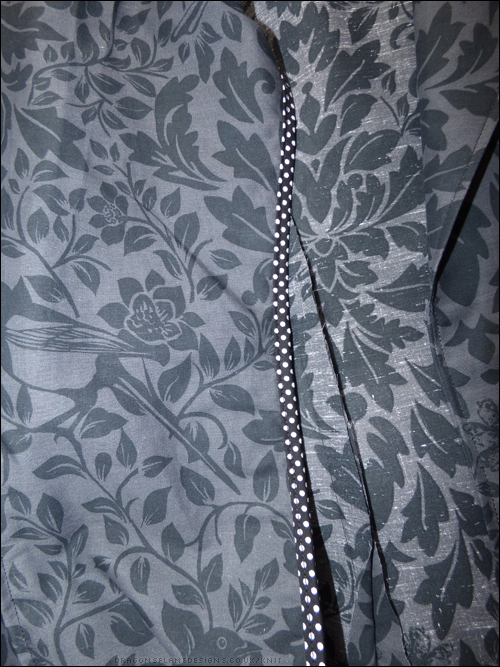
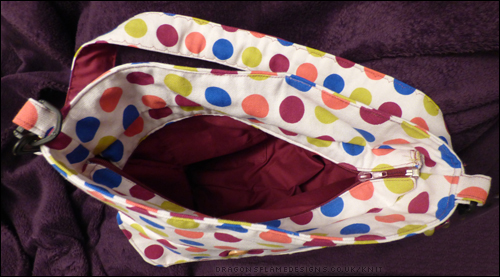
I struggled to get the top piece to line up to the zip – it’s the first time I’ve used an open (separating) zip, so I didn’t realise the metal at the end took up so much space. Partly because of the fraying canvas, and partly due to not cutting a little extra on the flaps, I didn’t have space to turn the flap pieces right-side-out and keep the metal part of the zip on the outside. So that side had to be zigzagged together – not an ideal finish.

However, using some double-sided fusible tape to ‘baste’ the zip in place seemed to work really well for that – much better than the back zip pocket (too many layers for the heat fro the iron to go through). And the zip is perfectly usable and relatively neatly stitched as well!

Rather than leaving a hole in the base of the lining to turn it all right-side-out (I really like my lining to be strong, and I didn’t feel that a hand sewn seam would have the strength I was after, I left a gap at the top, where the facing and outer join – that was able to be closed with the final top stitching, so you wouldn’t know there’d been a gap there 🙂
handbag-2

The only other thing I wish the course had pointed out, was that the angle of the top zip means that it needs to be pushed down into the bag to run smoothly – this means you can’t put anything in the bag that would be 1″ or less from the zipper flaps…. which means my entire bag really could’ve done with being an extra inch tall to compensate *sigh*

I would try making another bag from this course, mainly because now I know the ‘quirks’ of the methods, I should be able to rework it and make a bag with the [erfect (or near enough) dimensions!


Polka dot fabric from Abakhan (part of a ‘canvas remnant pack’), polycotton lining, cotton interlining and and accessories from a couple of local shops.

Beach Hut Messenger Bag

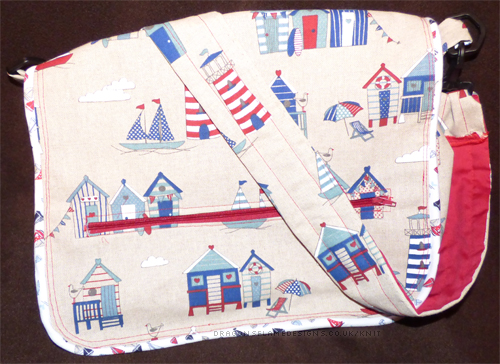
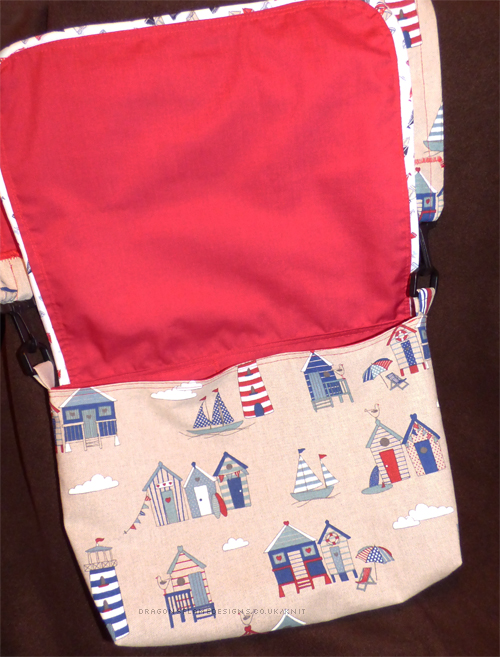
You can never have too many bags…. or at least you can never make too many bags! I’ve not been 100% certain about the way the lining looks caught up on the messenger bags I’ve previously made, so I decided to try out a new pattern. The Good-to-go messenger bag by Two Pretty Poppets, has a plain body with a patterned flap…. but I wanted to change that slightly, so I used their pattern, but with patterned fabric on the outside, and a plain lining.

I also added in a zipped pocket on the flap, piping around the flap (it’s not clear in the photo, but that’s white bias binding with sailboats on, to fit the beach theme), and added some plastic bag clips to hold the strap in place – not only does that make the strap removable if needed, but it also adds a nice touch to the finished bag.

Beach Hut Bag

Because of the way the bag is sewn together, the lining isn’t stretched around strange corners, and there’s no weird puckers and stretches on the inside. I also changed the inside pockets, to fit a small bottle of water and a smart phone, to save rummaging around amongst everything else just to find the phone when it rings.

Beach Hut Bag

I would probably make the bag slightly taller if I made another, and maybe also add in the clasp to close it (I left that out, as I wasn’t too sure how accurately I could attach it!), but I think it’s a very good pattern, and it’s also a lot easier to sew than the previous one I tried!

New Look 6230

Sew Magazine came with a free New Look 6230 pattern a couple of months ago, and I was drawn to the baseball t-shirt look. It doesn’t have set-in sleeves, which is a nice bonus as set-in sleeves and me don’t tend to get on!

I found some really funky fabric, but I decided it was a bit too busy to use for the entire top, so I balanced that out with some plain purple. Again all the seams are zigzagged, including the top stitching, so they should stretch with the fabric. I did get in a bit of a mess trying to attach the collar, but apart from a few pleats and stretch marks on one side, it looks pretty good. I’m still struggling to work out the size I need though – this one was way too wide on the neckline, so I brought in the body-sleeve seams by about 1/2″ on both sides to try and narrow the shoulders a little.

New Look 6230

The sleeves are nice and roomy, but I think if I make another of these, I would try the smaller size for the shoulders, and just widen it a little at the waist to try and get a more suitable width on the shoulders.

New Look 6230

New Look 6230 – excuse my unphotogenic eczema-covered wrists and hands


Sewing With Knits – Fleece Hoodie

The thought of sewing with stretchy fabric terrified me – I’d heard all sorts of horror stories about how the fabric stretched out of shape while sewing, or all the stitches snapped when the person tried on the finished item. However, I couldn’t find a hooded sweatshirt in the shops that suited me, so I wanted to try making my own.

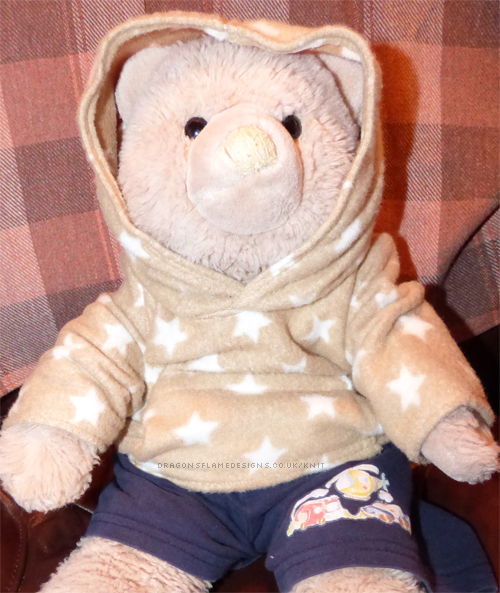
Craftsy had a sale, so I decided to take the plunge and enrol on the Sewing With Knits course. It includes 5 patterns for different items of clothing, including a fleece hoodie. I printed off the pattern in a smaller scale to start with, and stitched a teddy bear sized hoodie as a test run.

Pockets are always useful, so I added a free-style kangaroo pocket to the front.

Mini Fleece Hoodie

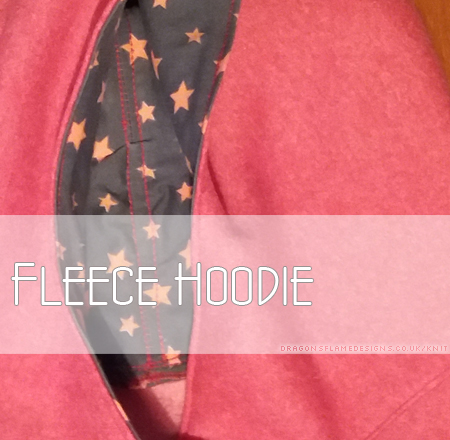
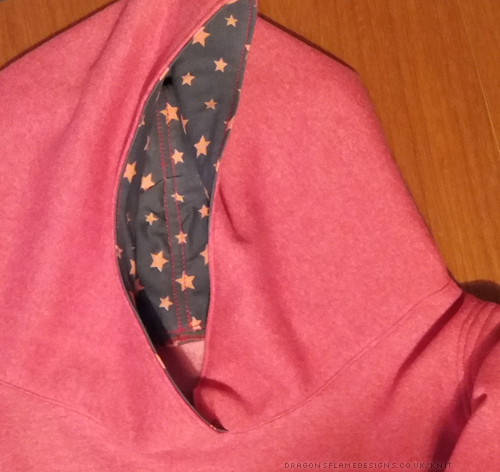
Spurred on by my success, I went searching for sweatshirt fleece. This was surprisingly hard to find, but I eventually came across a really nice red fleece, which has slightly lighter red stars printed on it. Not wanting the fleecy side to be against my hair on the hood, I also picked 50cm of jersey fabric to use as the hood lining.

The pattern doesn’t include a hood lining, so I used my usual method of trial-and-error to get it to line up. Admittedly some of the top stitching down the sides of the seam aren’t entirely level on the lining, but that’s not overly noticeable unless you look really closely. To get the lining attached to the hood, I left a small gap on back neck edge to turn it the right way out – as that’s underneath the hood, it’s not too obvious that there’s an extra line of top stitching there just to hold that seam closed.

Fleece Hoodie

All the seams were sewn on my regular sewing machine, using a zigzag stitch. I do have a stretch stitch option, but the craftsy course used zigzags, so that’s what I stuck with. I haven’t decide yet if I should attempt a double zigzag hem, or if a twin needle hem would work better – it’s mainly down to the bulk of the fleece, which one would look the neatest.

Gryffindor Sock Owl

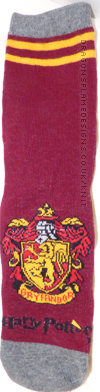
I was browsing the Primark website the other day, when I came across a pack of 4 pairs of Harry Potter themed socks. “Nothing special about that”, I hear you say, but I had plans for these socks….

Sock Owls

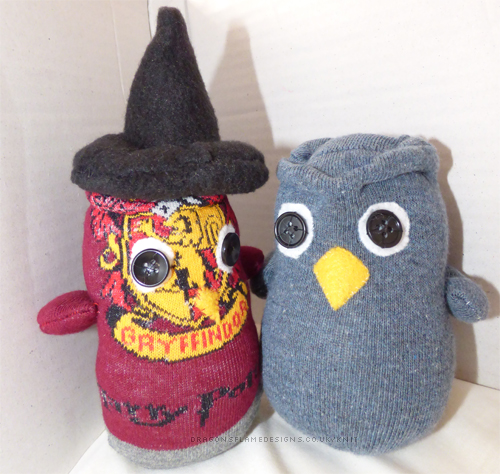
Wouldn’t it be a neat idea to make these into sock owls? I’d already made one out of a grey sock, but while it looks cute, it’s not really all that startling. My first challenge was the orientation of the sock – the pattern uses the toe part of the sock as the head, but then the writing and crest would be upside-down. Gathering the heel part of the sock, I realised I would need to add something to the head in order to cover the stitches and make it look more finished.

Sock Owls

Cue the Witch Hat free pattern from BeeZee Art on Craftsy – what better way to shout “Harry Potter” than an owl wearing a wizarding hat?

I stitched the hat by hand, but I think it would look better on the machine, as then the brim could be totally flat on the edges. However, for a first Gryffindor Owl, I think it looks pretty cute, and I’m already planning the next 7 owls from the remaining socks! 🙂


New Look 6178

I’ve been struggling to get the sizing worked out for fitted clothing like tops and dresses – no matter how closely I follow the instructions, there’s still a weird bit of excess fabric on the neck, or it’s too snug on the waist. So I thought I’d try using some jersey offcuts I’d bought as a bargain buy from my local fabric shop, and make myself a vest top or two.

New Look 6178 is relatively easy to make, with no darts or equally awkward points to mark and sew. The straps were the most fiddly part, as the stretchy nature of the fabric didn’t lend itself to being pinned…. I think clips might have worked better, but eventually I got them to behave.

New Look 6178

I’m only 5′ tall, so I did shorten the pattern to ensure the waist was at the right point. Unfortunately this means the first one (the black & reddy pink vest on the left) is a little shorter than I’d like, but it’s still wearable. I added several inches onto the length for the purple one, so I can find the ideal length before hemming it.

Stitching on my regular machine, I used a zigzag for the main stitching, but I’ll use a double needle and a straight stitch for the hem, just to give a more professional finish.

Hooded Towel

I was searching for a suitable “first birthday” gift, and came across Amber’s Hooded Towel pattern, which seemed ideal. I couldn’t find any brown towels, so I picked cream, with a tan shade for the nose and inside of the ears, plus a white flannel for the whites of the eyes (the black pupil was made from acrylic felt).

It came together really easily, considering it’s the first hooded towel I’ve made, and I hope the little boy likes it!

towel

Because it worked so well, I’ve already got plans for another one for another child’s first birthday coming up later in the year – maybe yellow towels to make Winnie-the-Pooh.

Simplicity 1556

The trouble with buying bubble bars from Lush, is that they come in a paper bag. Great for the environment, but what do you store it in to stop all the pieces going everywhere? I’ve found some small plastic food containers in Poundland that work pretty well, but then you get a pile of them in the wardrobe, which invariably falls over whenever you want to find something.

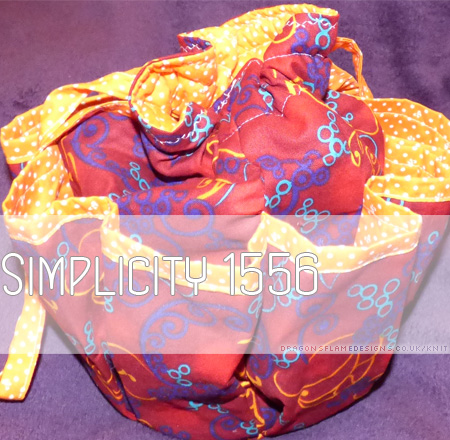
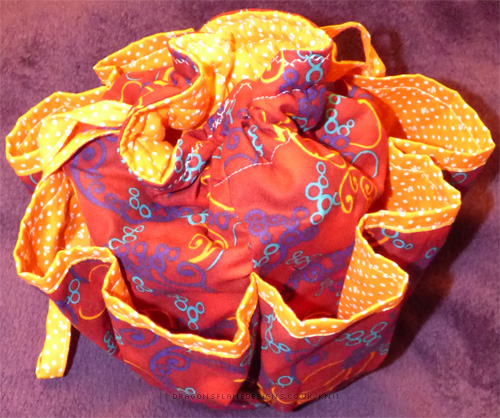
So, I decided to make Simplicity 1556 for my Mum’s Christmas present – a drawstring bag with pouches around the outside. There’s no dimensions given on the pattern envelope, but going on the fabric requirements, I hoped it would be large enough to work.

basket1

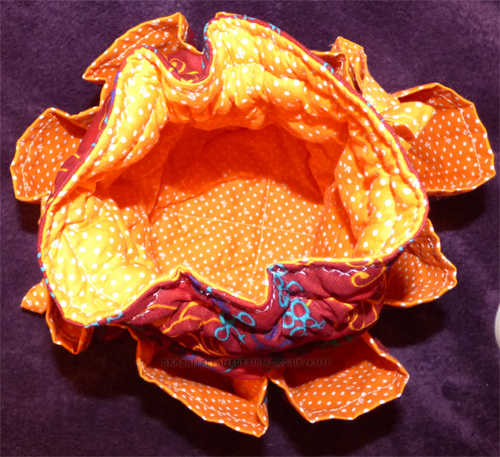
Armed with my red and orange outer fabric, and some nicely patterned orange lining fabric, my first problem was with the usual “fusible fleece”. Not having any of that to hand (and realising that if I bought it from the only shop I found it for sale, it’s cost more than the fabric did), I decided to use 2oz polyester wadding instead. I quilted that to the base and bag linings, so you can’t see the stitching on the outside.

asket2

Attaching the pouch strip was challenging, and some of the pouches are a different width to the others, but it fits the items I want to put in there. I will also admit I messed up the drawstrings, sewing the wrong ends together, but it still draws closed so I’m not going to unpick that!

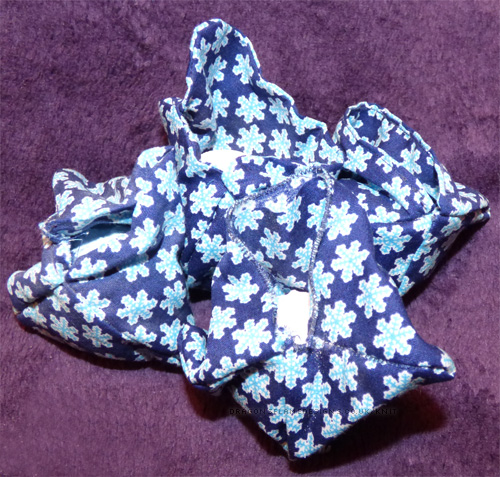
I wanted to give her a pack of bath bombs from Slimbridge Soaps, but the packet of 4 wouldn’t fit into the pouch, so I made some small sewn bags to put them in individually – that way I can get one item per pouch, so it’ll fill them up 🙂

basket-pouches1

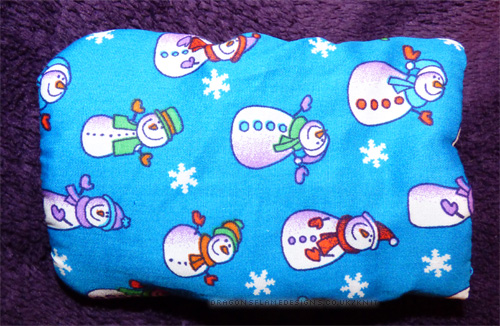
Lush didn’t stock her favourite bubble bar this year, but I did find an alternative – but what to put it in? I couldn’t just put it straight into the pouch, as they sometimes leave a greasy stain and that wouldn’t look good for a present. So I made a quick quilted pouch (quilting the lining again), which should mean the bubble bar can slide in, and hopefully not make a mess everywhere!

basket-pouch2


Basket fabric from Fashion Fabrics, Christmas fat quarters from John Lewis

Loyalty Card Wallet

I don’t know about you, but I have so many loyalty cards, it’s hard to find the right one in my wallet! So when I decided to give a relative a Starbucks card as part of their Christmas present, I thought I’d sew a basic wallet to store it in.

I found the pattern at Crafty Cupboard, and found this one a lot easier to follow than the previous wallet I’ve made. I didn’t have any fusible fleece, so I used some lightweight interfacing on the lining and the outer fabric, just to give it some more stability.

wallet1

The pockets aren’t lined, so I’m not too sure how well they will last, but it looks strong enough for the moment. I used a hair elastic and a hand-sewn button to close the wallet – the last one I made didn’t have a closure, so there’s a risk of the cards sliding out in your bag.

wallet2

I was hoping to find a novelty button with a cup of coffee painted on it, to go with the Starbucks theme, but there didn’t seem to be any about so I resorted to a plain black button instead, to match the hair elastic.